Who is Galileo Galilei?
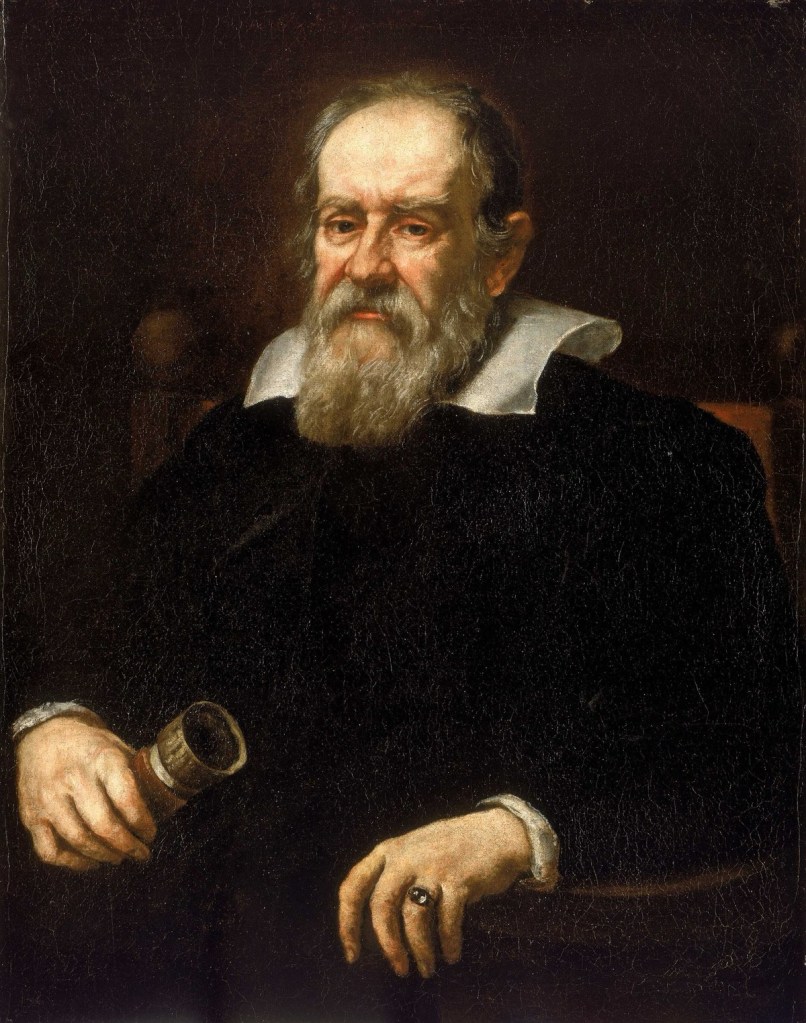
Galileo Galilei (1564–1642) was an Italian astronomer, physicist, and mathematician, widely regarded as one of the most influential figures in the history of science. He is famous for several key contributions:
- Astronomy: Galileo was the first to use a telescope to observe celestial bodies systematically. His observations of the moons of Jupiter, the phases of Venus, and the craters on the Moon provided crucial evidence that supported the heliocentric model (the idea that the Earth orbits the Sun), challenging the then-dominant geocentric view.
- Physics: Galileo made significant discoveries in the field of motion. He developed the concept of inertia and conducted experiments to show that objects of different masses fall at the same rate in the absence of air resistance. His work laid the foundation for classical mechanics, which was later refined by Isaac Newton.
- Scientific Method: Galileo is also credited with advancing the scientific method, emphasizing observation, experimentation, and mathematics as the primary tools for understanding the natural world.
- Conflict with the Church: Galileo famously came into conflict with the Catholic Church for advocating the heliocentric model, which was considered heretical at the time. He was tried by the Inquisition in 1633, forced to recant his views, and spent the rest of his life under house arrest.
Overall, Galileo is celebrated for revolutionizing our understanding of the universe and laying the groundwork for modern science.
 Murder mystery 2